Why Choose Autonomous Guided Vehicles at the 139th Canton Fair?
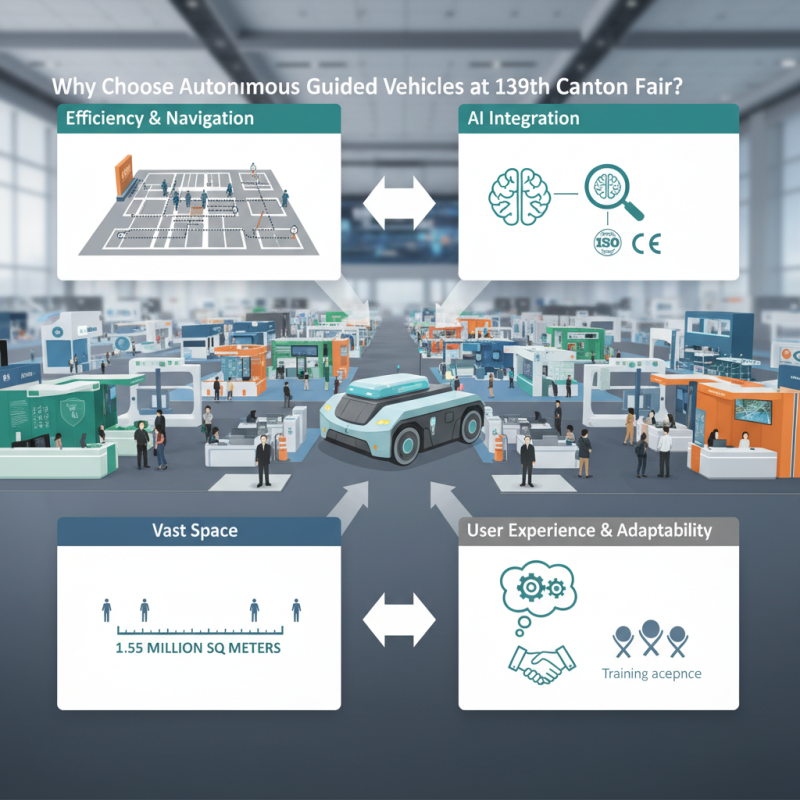
The 139th Canton Fair introduces a new era of efficiency with Autonomous Guided Vehicles. This innovative technology enhances the exhibition experience for buyers and suppliers alike. With the fair covering 1.55 million square meters, navigating such a vast space can be challenging.
Autonomous Guided Vehicles streamline this process, allowing guests to move efficiently. They navigate through the exhibition areas, ensuring that visitors can find exhibitors quickly. In addition, these vehicles are integrated with AI technology for better search capabilities. Buyers can locate specific suppliers with required certifications, like ISO and CE, facilitating informed decisions.
However, the implementation of Autonomous Guided Vehicles is not without challenges. Users may initially feel uneasy with the technology. It's crucial to consider user training and adaptability in the fair's environment. As we embrace innovation, reflections on user experience will be key to success.
The Rise of Autonomous Guided Vehicles in Industrial Automation
The rise of Autonomous Guided Vehicles (AGVs) in industrial automation is reshaping supply chain efficiency. AGVs streamline operations while reducing human error. They navigate complex environments, transporting goods from one point to another with precision. This technology enhances productivity and improves safety in warehouses and factories.
AGVs not only operate efficiently but also adapt to various tasks. They can be programmed for multiple functions. This versatility is key in fast-paced industries. However, implementing AGVs is not without challenges. Companies face integration hurdles with existing systems. Training staff to work alongside AGVs requires time and resources.
Tip: Start with a pilot program. Test AGVs in a controlled setting before broader deployment. Monitor performance closely and gather data for improvement. Consider feedback from employees to enhance usability and effectiveness. Embrace the learning curve; it's a critical part of the transition. AGVs represent a future filled with potential, but the journey to full efficiency needs thoughtful planning.
Benefits of Implementing AGVs at Trade Shows and Exhibitions
Autonomous Guided Vehicles (AGVs) are revolutionizing trade shows and exhibitions. They enhance efficiency and streamline operations. Their ability to transport goods autonomously saves time. This is critical at large events like the Canton Fair, where every minute counts.
In addition to improving logistics, AGVs offer flexibility. They can adapt to various spaces, fitting into different exhibition layouts. This versatility helps exhibitors maximize their presence without overwhelming the space. However, not all AGVs are the same. It's important to assess which type suits your needs best.
Tips: Consider the size of your exhibit. Smaller AGVs may be ideal for tighter spaces. Additionally, involve your team in the decision-making process. Their insights can highlight areas AGVs might improve. Finally, keep in mind that training may be required. Proper understanding can lead to smoother operations.
Market Trends: AGVs Adoption Rates and Industry Growth Statistics
Autonomous Guided Vehicles (AGVs) are transforming industries today. Their adoption rates are climbing rapidly. According to recent data, AGVs are becoming crucial in logistics and manufacturing. Many companies recognize their potential to improve efficiency. The rise in e-commerce has driven demand for faster operations. AGVs help meet these needs by automating transport tasks.
Growth statistics illustrate this trend. A notable percentage of businesses are investing in AGV technology. In warehouses, AGVs cut down on human labor costs and errors. They are reliable and can work around the clock. However, many organizations face challenges in implementation. Integration with existing systems can be complex. Staff training is vital for successful AGV operation. Companies need to plan carefully to overcome these hurdles.
Despite these challenges, the future looks bright for AGVs. Industry experts predict continued growth. As technology evolves, their capabilities will expand. Businesses must remain adaptable and open to change. There are still many questions to answer about best practices. Companies should reflect on their strategies to maximize AGV benefits.
Case Studies: Successful AGV Integrations at Previous Canton Fairs
Autonomous Guided Vehicles (AGVs) have transformed logistics at trade events. At the Canton Fair, AGVs streamline operations, leading to notable success stories. For instance, one exhibitor utilized AGVs to transport materials efficiently throughout the venue. They saved time and reduced manual labor, making their booth more appealing.
However, integrating AGVs is not without challenges. Some exhibitors faced connectivity issues, hindering real-time tracking. Adequate planning and training are essential to maximize their benefits. One company had to rethink its strategy after experiencing delays in AGV deployment. Reflecting on these experiences can lead to better implementations in future fairs.
At the last Canton Fair, another exhibitor showcased how AGVs improved customer engagement. Attendees were fascinated by their movement and functionality. This curiosity enhanced foot traffic to their booth. Despite initial hurdles, the value of AGVs in creating a modern, efficient trade show environment is undeniable.
Future Prospects: Innovations in AGV Technology and Their Industry Impact
Autonomous Guided Vehicles (AGVs) are transforming industries. A recent report by the International Federation of Robotics notes that the use of AGVs in warehouses has increased by over 30% in the past three years. This surge highlights a shift towards automation. Companies are drawn to AGVs for their efficiency. On average, AGVs can reduce operational costs by up to 20%.
However, implementing AGVs is not without challenges. The integration process can be complex. Many companies require substantial upfront investments and training for staff. A survey from Gartner reveals that 45% of businesses struggle with technology adoption. Users often encounter issues with software compatibility and infrastructure updates. These considerations are crucial for long-term success.
Looking ahead, AGV technology continues to innovate. Developments in artificial intelligence are enhancing navigation and safety. As these systems become smarter, we expect increased flexibility in operations. However, the pace of innovation may outstrip user readiness. Companies must continuously evaluate their capabilities and prepare for future advancements. This reflection is essential for sustainable growth in the AGV sector.


