7 Tips for Choosing Coal Mine Fans for Global Buyers
Coal Mine Fans are not ordinary industrial blowers. They control airflow, dilute methane, remove dust, and support safe working conditions underground. For global buyers, the purchase decision must connect airflow performance with mine depth, roadway resistance, gas conditions, climate, and local certification requirements.
The International Energy Agency reported that global coal demand exceeded 8.5 billion tonnes in 2022. This scale keeps ventilation reliability commercially important. NIOSH research also identifies mine ventilation as a critical engineering control for methane and respirable dust exposure. In the United States, MSHA regulations require main mine fans to provide adequate ventilation and maintain dependable operation. Other markets apply different testing, electrical, and explosion-protection rules. Certification is not interchangeable.
Small details matter. A fan may deliver the rated airflow in a factory test, yet perform differently after installation. Duct leakage, dirty blades, unstable power, and rising system resistance can reduce real output. A spreadsheet can look precise. The mine does not.
This guide presents seven practical tips for selecting Coal Mine Fans for international projects. It examines duty-point calculations, axial and centrifugal designs, energy use, noise, monitoring, maintenance access, and emergency backup planning. Buyers should request verified performance curves, material specifications, motor data, vibration limits, and test records. They should also confirm service support near the mine site.
Do not choose from airflow alone. Pressure, efficiency, control response, and reliability must be assessed together. The final decision should be reviewed by qualified ventilation engineers and matched to applicable national standards. Mistakes are expensive. Good selection begins with evidence, not marketing language.
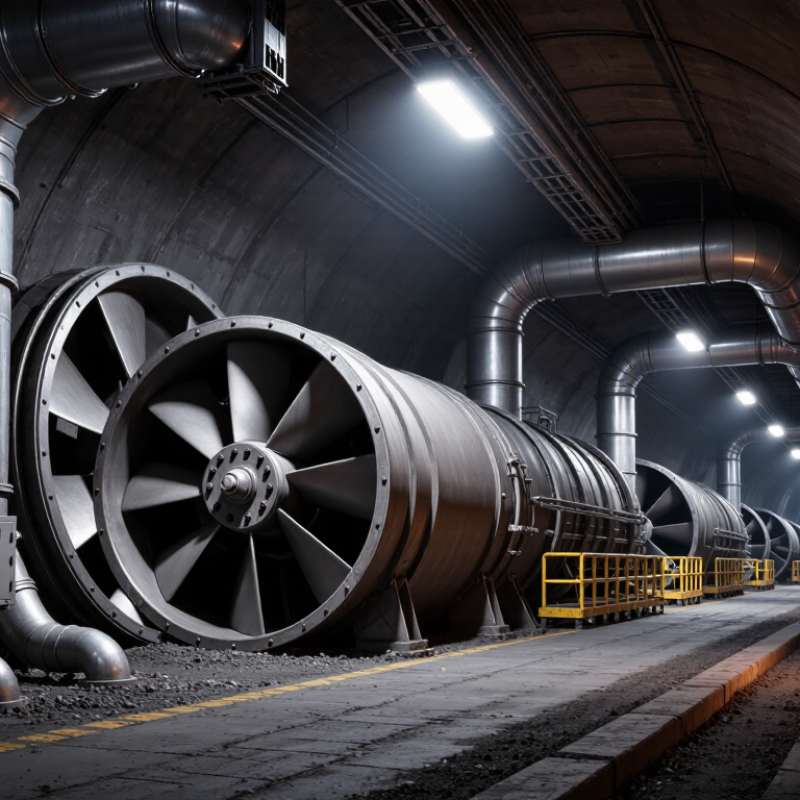
Define Mine Ventilation Needs and Operating Conditions
Choosing a coal mine fan starts with the mine, not the fan catalogue. Map active headings, methane sources, dust levels, heat, diesel equipment, depth, and seasonal airflow changes. The International Energy Agency’s Coal 2023 report shows coal demand remains exceptionally high, increasing pressure on mines to maintain dependable production and ventilation. Production targets alone are not enough.
Measure required air quantity at each district and calculate resistance across stoppings, regulators, shafts, and ducting. The International Labour Organization’s Safety and Health in Coal Mines Code stresses controlling methane, dust, heat, and oxygen quality through planned ventilation systems. In the United States, MSHA rules require methane to remain below defined action limits, including withdrawal requirements at higher concentrations. Local regulations may differ. Treat this as a design boundary, not a specification shortcut.
Operating conditions also change fan selection. A deep mine may need higher static pressure, while a long intake route increases leakage and energy loss. Record altitude, ambient temperature, humidity, corrosion exposure, and available power before comparing models.
Underground surveys often reveal unexpected pressure losses. That is where experience matters.
Do not oversize blindly. A larger fan can waste energy, increase noise, and disturb dust control. NIOSH research has repeatedly identified respirable coal dust as a serious mining hazard, so airflow direction and distribution deserve equal attention. Recheck calculations after layout changes.
My own practical concern is simple: early airflow estimates are often too optimistic, especially when leakage data is incomplete. Use measured readings, not assumptions.
Evaluate Safety Features for Coal Dust and Gas Control
Coal mine fans must control more than airflow. They must dilute methane, remove dust, and support escape routes during emergencies. The International Energy Agency estimated that coal mines released about 40 million tonnes of methane in 2023. That figure makes gas monitoring and ventilation reliability commercial priorities, not optional upgrades.
Check the fan’s airflow range under real resistance, not laboratory assumptions. Ask for certified performance curves, pressure testing, temperature limits, and emergency power data. Methane can form explosive mixtures between roughly 5% and 15% in air. Therefore, buyers should verify sensor response, automatic alarms, and shutdown logic. Fan motors, cables, and controls should match the applicable explosion-protection requirements. Small details matter.
Dust needs equal attention. The U.S. Mine Safety and Health Administration limits respirable coal mine dust exposure to 1.5 mg/m³ for underground miners. Select fans that maintain stable air velocity without creating turbulent dust clouds near faces, transfer points, or roadway corners. Sealed housings and accessible inspection panels reduce maintenance mistakes. Do not trust airflow figures alone. A fan may perform well on paper but struggle after dust buildup, worn blades, or blocked ducts. This is where many purchasing decisions become too optimistic. Compare independent test records, maintenance intervals, spare-part access, and site-specific gas data before approval.
Compare Materials, Maintenance, Certifications, and Service Support
Coal mine fans are safety-critical assets, not ordinary industrial equipment. Selection should begin with airflow, pressure, gas conditions, dust exposure, and emergency duty. The IEA’s Global Methane Tracker 2024 estimates that coal mining contributes around 40 million tonnes of methane emissions annually. Proper ventilation design therefore supports both worker protection and methane control. Tip: Match the fan curve to the measured mine resistance, not a catalogue estimate.
Tip: Compare steel, coated steel, and corrosion-resistant alloys against humidity and acidic water. Tip: Check impeller balance, bearing access, vibration monitoring, and motor efficiency. Tip: Demand documented testing under relevant IEC, ATEX, MSHA, or national requirements. Certification must fit the installation country and hazardous-zone classification. Tip: Ask for traceable factory test records, not only a certificate number.
Maintenance planning affects lifetime cost more than the purchase price. The U.S. Mine Safety and Health Administration requires mine ventilation controls, inspections, and approved equipment in applicable underground operations. Buyers should request inspection intervals, spare-part lead times, training, and remote troubleshooting arrangements. Tip: Confirm whether technicians can respond across time zones. Tip: Put service response times in the contract. A low-cost fan can become expensive after one unavailable bearing. I have seen specifications overlook access space around the fan. That mistake is avoidable, but common. Compare noise, energy use, and lifecycle data from witnessed tests, while leaving room for independent verification.
7 Tips for Choosing Coal Mine Fans for Global Buyers
The chart presents an illustrative procurement weighting for comparing coal mine fans. Airflow and pressure performance should be verified against the ventilation design, while materials, maintenance access, explosion-protection certification, energy efficiency, vibration control, and service support should be assessed according to local regulations and site-specific risk requirements.
Suggested evaluation weighting: 100% total. Adjust the percentages after completing the mine ventilation risk assessment and reviewing applicable standards such as IEC 60079, ATEX, MSHA, or equivalent national requirements.


