How to Choose Glass Magnesium Rock Wool Sandwich Panels
Choosing a Glass Magnesium Rock Wool Sandwich Panel requires more than comparing prices or surface colors. The right panel must match the building’s fire, thermal, acoustic, and moisture-control demands. It should also suit the installation environment, maintenance plan, and local construction requirements.
Dr. James A. Milke, a respected fire-safety engineering specialist, emphasizes a practical principle: “Fire performance belongs to the tested assembly, not one material alone.” This principle matters when evaluating a Glass Magnesium Rock Wool Sandwich Panel. The core, facings, joints, fasteners, and sealants work together. A panel may contain non-combustible rock wool, yet poor joints can reduce real-world protection. Look closely.
Begin with the project’s actual conditions. A cold-storage wall may need strong thermal resistance and carefully sealed joints. A factory partition may require impact strength, sound control, and frequent cleaning. For humid areas, inspect the glass magnesium surface, edge treatment, and moisture resistance documentation. Do not rely on a brochure alone. Request test reports, product specifications, fire classifications, and installation instructions from established manufacturers.
Panel thickness is important, but it is not the entire decision. Density, compressive strength, connection details, and dimensional tolerance also affect performance. Touch the sample. Check its flatness. Examine the cut edge for crumbling or uneven bonding. Small defects can become expensive problems later.
There is no universally perfect panel. That is worth remembering. A technically strong product can still fail when installers ignore joint design or site conditions. This guide explains how to compare panel construction, verified performance, supplier reliability, installation quality, and long-term value before making a confident selection.
Glass Magnesium Rock Wool Sandwich Panels: Basic Structure and Function
How to Choose Glass Magnesium Rock Wool Sandwich Panels
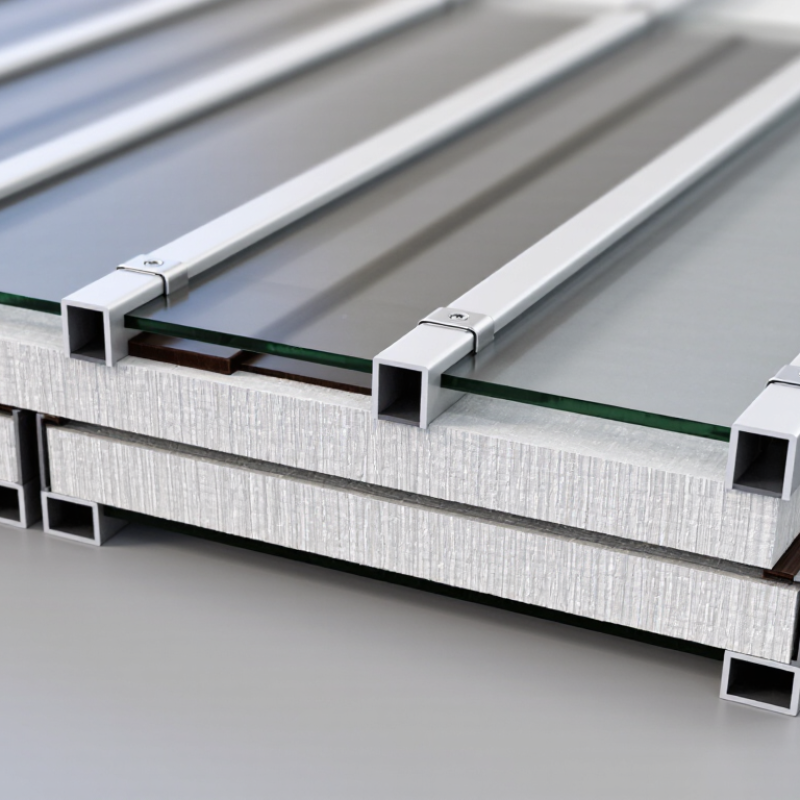
Glass magnesium rock wool sandwich panels combine rigid glass magnesium boards with a dense rock wool core. The boards usually contain magnesium oxide, reinforcing fibers, and mineral fillers. They form the protective faces of the panel. The rock wool layer sits between them like a compact, fibrous blanket.
This structure serves several functions. The core slows heat transfer and can reduce airborne noise. It also helps resist flame spread when the complete panel system has suitable fire-test evidence. The outer boards provide stiffness, impact protection, and a clean surface for interior or exterior finishing. Details matter. Poor edge sealing can allow moisture into the core. Weak fasteners may create movement, cracking, or gaps around joints.
During site inspections, I check panel thickness, core density, board flatness, and joint alignment. A heavier core is not automatically better. It must match the required thermal, acoustic, and fire performance. Ask for test reports that identify the full assembly, not only separate materials. Check the panel’s water absorption data and installation limits.
Small defects can become expensive. A chipped edge may look harmless. It can later weaken the joint. I would also inspect cutting dust, screw spacing, and sealant coverage before closing the wall. Specifications sometimes appear clear, yet site conditions expose missing details. That is where careful review is still needed.
Glass magnesium rock wool sandwich panels consist of glass magnesium boards bonded to a non-combustible rock wool core. Increasing the core thickness generally improves calculated thermal resistance. The values below use a representative rock wool thermal conductivity of 0.040 W/m·K and the formula R = thickness ÷ thermal conductivity; actual performance depends on joints, moisture, density, and installation quality.
Key Performance Factors to Evaluate Before Choosing
How to Choose Glass Magnesium Rock Wool Sandwich Panels
Key Performance Factors to Evaluate Before Choosing
Thermal performance should be checked under declared test conditions. The International Energy Agency reports that buildings consume about 30% of global final energy. Panel thickness, rock wool density, joint design, and thermal bridging all affect actual performance. Ask for tested U-values, not estimated insulation claims. ASTM C518 and ISO 8301 provide recognized methods for measuring thermal transmission. A low U-value alone can mislead.
Fire resistance deserves equal attention. Rock wool is generally non-combustible, but the complete sandwich panel includes facings, adhesives, coatings, and joints. Request fire reaction and resistance reports based on EN 13501-1 or equivalent standards. Check the tested thickness and mounting system. They must match your project. A certificate for one assembly may not cover another. This detail is often missed.
Moisture behavior is harder to judge. Glass magnesium boards can perform well, yet edge absorption, fastener holes, and poor sealing may reduce durability. Look for water absorption, dimensional stability, freeze-thaw, and corrosion data. ASTM C272 can support water absorption evaluation, while EN 14509 addresses factory-made insulated panels. Acoustic performance also needs measured results, such as sound transmission loss under ASTM E90. I would inspect cut edges personally. Laboratory numbers cannot fully represent careless installation, repeated wetting, or damaged joints. Ask for independent reports, production quality records, and samples exposed to realistic site conditions.
How to Match Panel Specifications With Building Requirements
Choosing glass magnesium rock wool sandwich panels starts with the building’s actual demands, not a standard thickness. For a cold warehouse, compare insulation targets with local design temperatures and heating loads. A thicker core may reduce heat loss, but it can complicate door frames and flashing details. Fire performance also needs careful checking. Confirm the tested assembly, not only the core material. Wall panels near kitchens, workshops, or plant rooms may require stronger protection than office partitions. Sound control matters too. Dense rock wool can help, yet gaps around joints often weaken the result.
Match panel specifications with roof or wall spans, support spacing, wind pressure, and expected impact. Ask for verified compressive strength, bending data, moisture resistance, and dimensional tolerances. Glass magnesium facings should suit the site’s humidity and fixing method. In coastal or damp areas, inspect edge sealing and drainage paths before installation. Panel thickness is only one part. Joint design, fasteners, fire stops, and penetrations can decide performance. A specification that looks excellent on paper may fail after careless cutting. That is an uncomfortable detail, but it deserves attention.
Tips: Build a simple schedule listing location, thickness, density, fire rating, thermal value, acoustic target, and finish. Request test reports and installation instructions from qualified suppliers. Keep a sample panel on site. Check its edges before approving large deliveries. Recheck assumptions with the engineer. Small revisions are cheaper early.
Comparing Fire Safety, Thermal Insulation, and Sound Control
How to Choose Glass Magnesium Rock Wool Sandwich Panels
Fire safety, thermal insulation, and sound control should guide panel selection. Do not judge performance from the core alone. Rock wool is generally non-combustible, but the complete panel needs testing. Check its classification under EN 13501-1, or fire-resistance results from relevant assembly tests. Joints, fasteners, openings, and edge details can change the outcome. A panel may perform well in a laboratory and fail at a poorly sealed site.
Thermal performance also deserves careful measurement. The IEA’s 2023 Global Status Report states that buildings consume about 30% of global final energy. Mineral wool cores commonly show thermal conductivity near 0.035–0.040 W/m·K, depending on density and moisture. Use the declared U-value, not a brochure’s isolated lambda figure. For sound control, request tested Rw or STC values under ISO 10140 or equivalent methods. Heavier facings, thicker cores, and sealed joints usually improve airborne sound reduction. Yet flanking noise can bypass the panel.
Tips: Compare full-system test reports, not marketing claims. Check core density, thickness, joint design, and moisture resistance. Ask whether results apply to your installation direction and support spacing. I would also inspect sample joints on site; small gaps are easy to dismiss, but they can weaken fire, thermal, and acoustic performance.
Installation, Maintenance, and Long-Term Value Considerations
Glass Magnesium Rock Wool Sandwich Panels: Installation, Maintenance, and Long-Term Value Considerations
A reliable installation begins with a dry, level supporting structure. Measure the wall twice, because small errors create visible gaps between panels. Store panels under cover, raised from the ground, and protect their edges from standing water. Installers should follow the panel manufacturer’s technical data for fastener spacing, joint treatment, and fire-rated assemblies. Rock wool provides useful thermal and acoustic performance, but the complete wall system must be tested as a system.
Seal panel joints carefully around doors, corners, and service penetrations. A narrow unsealed gap can reduce moisture resistance and sound control. Use compatible sealants and corrosion-resistant fasteners. Do not force damaged panels into place. That shortcut may save minutes, then create months of repairs. Site inspections often find crushed edges caused by careless lifting.
Maintenance is usually simple, but it should not be ignored. Inspect exterior joints, flashing, and fixings at least annually, especially after strong storms. Look for staining, swelling, loose screws, or cracked sealant. Clean surfaces with mild detergent and soft tools; aggressive cleaning can damage protective finishes. Replace wet or seriously damaged sections instead of covering them with new material. Long-term value depends on stable indoor humidity, proper drainage, and prompt repairs. Energy savings and fewer replacements can justify the initial cost, although actual results depend on workmanship, climate, and building use. The panel is not the entire answer.


