How to Choose the Right Artificial Lift Technologies for Oil Production?
Choosing the right Artificial Lift Technologies is crucial for efficient oil production. These technologies play a significant role in enhancing extraction rates and optimizing operations. Various factors influence this choice, such as reservoir characteristics, production methods, and economic considerations.
Different types of Artificial Lift Systems exist, including beam pumps and electrical submersible pumps. Each has its advantages and drawbacks. The effectiveness of these technologies often depends on specific well conditions. For instance, high-viscosity fluids may require different approaches than lighter oils. This complexity can make decision-making challenging.
Moreover, the cost and maintenance of implementing these technologies can vary widely. Some options may appear favorable initially but could lead to higher long-term expenses. It is essential to carefully analyze not just the immediate benefits but also the long-term implications of any chosen method. Ultimately, a well-informed decision will significantly impact productivity and profitability in oil production. This requires continuous learning and adaptation to evolving technologies and market conditions.
Understanding Artificial Lift Technologies: An Overview
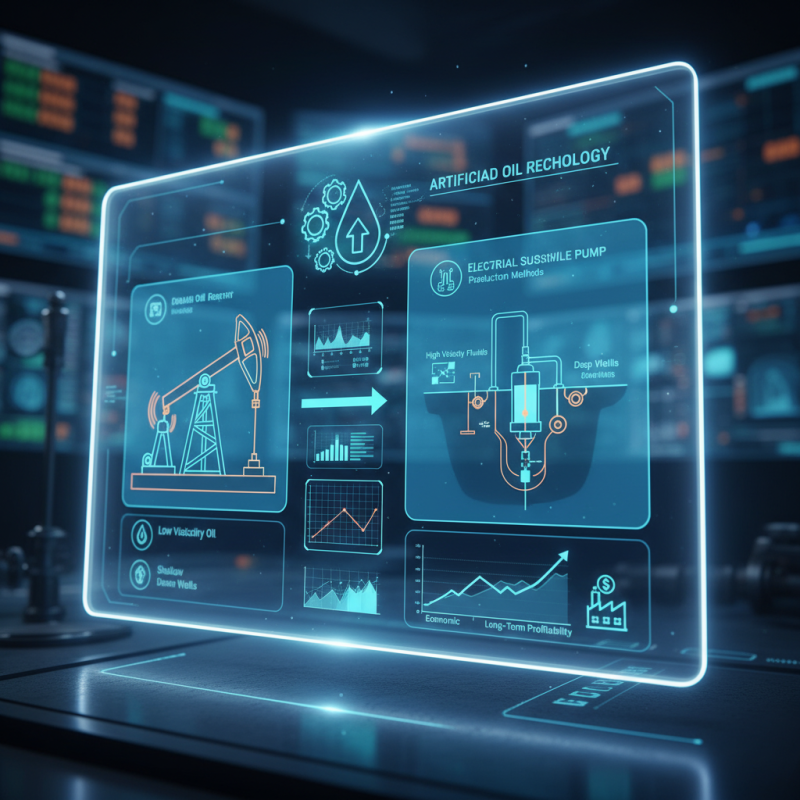
Artificial lift technologies play a crucial role in enhancing oil production. These methods help bring oil to the surface, increasing flow rates. The most common types include beam pumps, electric submersible pumps, and gas lift systems. Each has unique characteristics. For instance, beam pumps are ideal for shallow wells, while electric submersible pumps can handle higher pressures.
Choosing the right technology can seem overwhelming. It often depends on well depth, fluid type, and production rates. For shallow wells, a beam pump might be efficient. But deeper reservoirs often require robust electric submersible pumps. Operations may face challenges, like high gas-to-oil ratios or fluctuating reservoir pressures. In such cases, gas lifts can be a suitable alternative.
Investing time in analysis is crucial. Sometimes, companies overlook specific well conditions or fail to conduct proper testing. This can lead to suboptimal solutions. The choice of technology should align with production goals. Reflection on past performance and adjustments are vital. Continuous learning is necessary to optimize oil recovery effectively.
How to Choose the Right Artificial Lift Technologies for Oil Production?
| Technology | Type | Application | Efficiency (%) | Cost ($/barrel) |
| Electrical Submersible Pump (ESP) | Rotary | High volume, deep wells | 80-90 | 25-50 |
| Beam Pump | Mechanical | Shallow wells | 60-75 | 15-30 |
| Progressing Cavity Pump (PCP) | Rotary | Heavy oil, low production | 70-85 | 20-40 |
| Gas Lift | Gas-assisted | High GOR wells | 75-85 | 10-20 |
| Hydraulic Pump | Hydraulic | Deep wells with high viscosity | 80-90 | 30-60 |
Factors to Consider When Selecting Artificial Lift Systems
Choosing the right artificial lift technology for oil production involves several critical factors. Reservoir characteristics play a vital role in this decision. For instance, reservoir pressure, fluid composition, and the geological formation must be thoroughly assessed. According to a SPE (Society of Petroleum Engineers) report, approximately 90% of oil wells in the U.S. require some form of artificial lift. This shows the significance of tailored solutions.
Another essential aspect is the economic feasibility of an artificial lift system. The cost of implementation versus the expected production increase must be analyzed. A recent report by the International Energy Agency highlighted that the right lift system can increase production rates by up to 50%. However, the initial investment can be significant, which is a common concern for many operators.
Operational efficiency should also be prioritized. For instance, maintenance schedules need to be planned, balancing downtime and production boosts. Some systems may offer reliable performance, yet their upkeep can strain budgets. Companies should validate performance data from similar environments before making final choices. Failing to address these considerations may lead to , which could be detrimental in the long run.
Comparison of Commonly Used Artificial Lift Methods
When selecting artificial lift methods for oil production, understanding each technology's strengths and weaknesses is crucial. Common options include beam pumps, electrical submersible pumps (ESPs), and gas lift systems. Beam pumps are often favored for their durability and lower operational costs. However, they can struggle with highly viscous fluids. According to a recent industry report, nearly 50% of oil wells in the U.S. utilize beam pumps due to their effectiveness in shallow wells.
On the other hand, ESPs are suitable for deeper wells and higher production rates. They can handle larger volumes, making them a popular choice in offshore drilling. However, they have higher installation and maintenance costs. In contrast, gas lifting is effective for lighter oil and can minimize liquid buildup in the well. A study indicates that gas lift systems are employed in about 30% of oil fields where viscosity poses challenges.
Tips: Assess your reservoir characteristics before selecting a method. Consider well depth, production volume, and cost constraints. It’s essential to remain flexible, as conditions may change over time. Re-evaluating technologies periodically helps in maintaining efficiency and optimizing production rates. Adjustments may be necessary as new innovations emerge in the artificial lift landscape.
Economic Analysis of Different Artificial Lift Options
When considering artificial lift options, an economic analysis is crucial. Each technology has its costs and benefits. This analysis helps operators decide which option fits their budget and production goals. High upfront costs can be a barrier. However, the long-term benefits might outweigh these initial investments.
For instance, electrical submersible pumps (ESPs) may require significant installation costs. Still, they can handle high volumes efficiently in many wells. Conversely, rod pumps are less expensive initially but may have higher maintenance costs. These factors can impact overall profitability.
Data shows that production rates influence the choice of technology. In fields with declining production, lower-cost solutions may seem attractive. Yet, they can lead to increased downtime and lost production. Choosing the right technology requires a balance of short-term savings and long-term gains. A thorough review of production profiles is vital for making effective decisions. Understanding the economic implications leads to more informed choices without overlooking potential drawbacks.
Evaluating Performance and Efficiency of Artificial Lift Technologies
When evaluating the performance and efficiency of artificial lift technologies, it's critical to focus on key metrics. These include production rates, energy consumption, and operational costs. According to a recent industry report, optimized artificial lift systems can enhance oil recovery rates by up to 30%. However, this potential is not always realized due to improper selection.
Not all wells respond uniformly to artificial lift methods. For instance, a gas lift may work efficiently in one reservoir but could fail in another with different geological conditions. Additionally, energy requirements can vary significantly, impacting overall profitability. Data indicates that systems like electric submersible pumps (ESPs) can consume 10-20% more energy than anticipated if not properly scaled to the well's characteristics.
Choosing the right technology demands more than basic calculations. Factors such as well depth, fluid composition, and environmental conditions must be considered. Companies often overlook these details, leading to suboptimal outcomes. Inefficiencies arising from a mismatch in lift technology and reservoir dynamics can result in a loss of around 15% in potential output, highlighting the importance of thorough analysis in the decision-making process.


