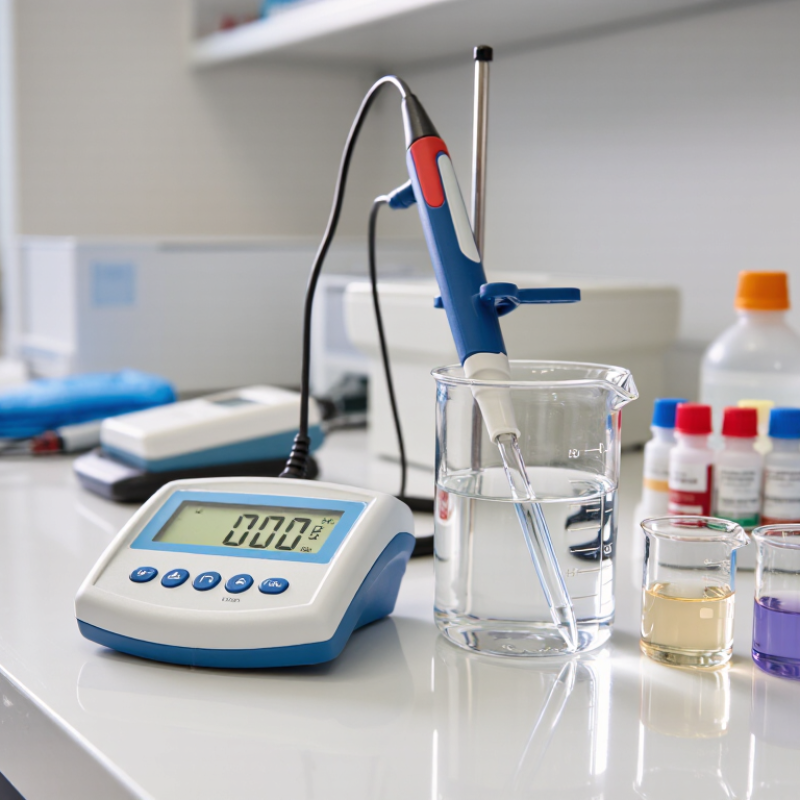
| General-purpose glass combination probe | Glass sensing bulb with a reference electrode in one body; commonly includes a porous junction. | Approximately pH 0–14, depending on the electrode construction and sample. | Typically ±0.01 to ±0.02 pH for laboratory-capable systems. | Provides good measurement performance but the glass bulb is fragile and sensitive to impact, drying, and thermal shock. | Store wet in electrode storage solution, rinse between samples, calibrate regularly, and inspect the junction for clogging. | Routine laboratory testing, water analysis, education, and general quality control. |
| Refillable glass combination probe | Separate refill port allows the reference electrolyte level and condition to be managed by the operator. | Usually about pH 0–14, subject to the electrode specification and operating temperature. | Often capable of approximately ±0.01 pH when correctly calibrated and maintained. | Generally offers stable reference performance, but the refill port and glass bulb require careful handling. | Maintain the correct electrolyte level, keep the junction moist, clean deposits promptly, and recalibrate after cleaning or extended storage. | High-accuracy laboratory work, samples with difficult junction behavior, and applications requiring serviceable reference systems. |
| Solid-state or ISFET probe | Uses a solid-state sensing surface rather than a conventional glass bulb; construction is usually more resistant to breakage. | Commonly designed for approximately pH 0–14, with model-specific limits. | Often around ±0.01 to ±0.05 pH, depending on the sensor and instrument. | High resistance to glass breakage and vibration; the sensing surface can still be affected by fouling, abrasion, and harsh chemicals. | Rinse thoroughly, clean according to the sensor material, prevent surface buildup, and follow the specified storage method. | Field work, process monitoring, food production environments, and applications where glass breakage is a concern. |
| Spear-tip or puncture probe | Reinforced or pointed tip designed to penetrate semi-solid materials while protecting the sensing element. | Usually within pH 2–12 for food and semi-solid samples, although the exact range is model-dependent. | Commonly approximately ±0.02 to ±0.05 pH in suitable samples. | Better mechanical protection than a standard bulb, but excessive force, twisting, or use on hard surfaces can damage the tip. | Remove sample residue immediately, use compatible cleaning solutions, keep the junction hydrated, and avoid scraping the tip. | Soil, cheese, meat, fruit, fermentation materials, and other semi-solid products. |
| Pocket or pen-style combination meter | Compact integrated electrode and display; many versions use a fixed or replaceable probe assembly. | Commonly pH 0–14, with some compact models offering a narrower usable range. | Typically ±0.05 to ±0.1 pH, depending on the instrument class and calibration condition. | Convenient and portable; compact electrodes usually have less physical protection and shorter service lives than larger laboratory probes. | Rinse after every use, keep the sensor wet, calibrate frequently, replace batteries when needed, and protect the tip during transport. | Rapid checks in hydroponics, aquaculture, pools, classrooms, kitchens, and general field screening. |
| Flat-surface probe | Flat or recessed sensing surface designed to measure small volumes, surfaces, creams, gels, or viscous samples. | Often approximately pH 2–12, depending on the sensing material and sample matrix. | Commonly about ±0.02 to ±0.1 pH in suitable conditions. | The protected face resists bulb breakage, but scratches, blocked junctions, and abrasive cleaning can impair performance. | Clean the surface carefully after use, avoid abrasive tools, maintain moisture, and verify calibration with fresh buffers. | Cosmetics, creams, gels, paper surfaces, small-volume samples, and challenging non-liquid products. |