What is Die And Stamping Process and Its Applications?
The Die And Stamping process is an essential manufacturing technique widely used across various industries. According to a recent industry report by Grand View Research, the global die casting market is projected to reach over $90 billion by 2027. This significant growth highlights the increasing reliance on die stamping for producing intricate metal parts efficiently.
Expert in the field, Dr. Emily Tran, emphasizes the importance of the Die And Stamping process, stating, "Precision and efficiency define the future of manufacturing." This insight is pivotal, as companies strive for competitive advantage in a rapidly evolving market. The Die And Stamping technique is not just about creating parts; it ensures quality and reduces waste.
However, challenges remain. Many businesses face difficulties in keeping up with new technologies. The need for skilled labor in Die And Stamping operations is also a critical issue. As the industry progresses, companies must focus on training and innovation to remain relevant. Addressing these challenges head-on is vital for success in this dynamic sector.
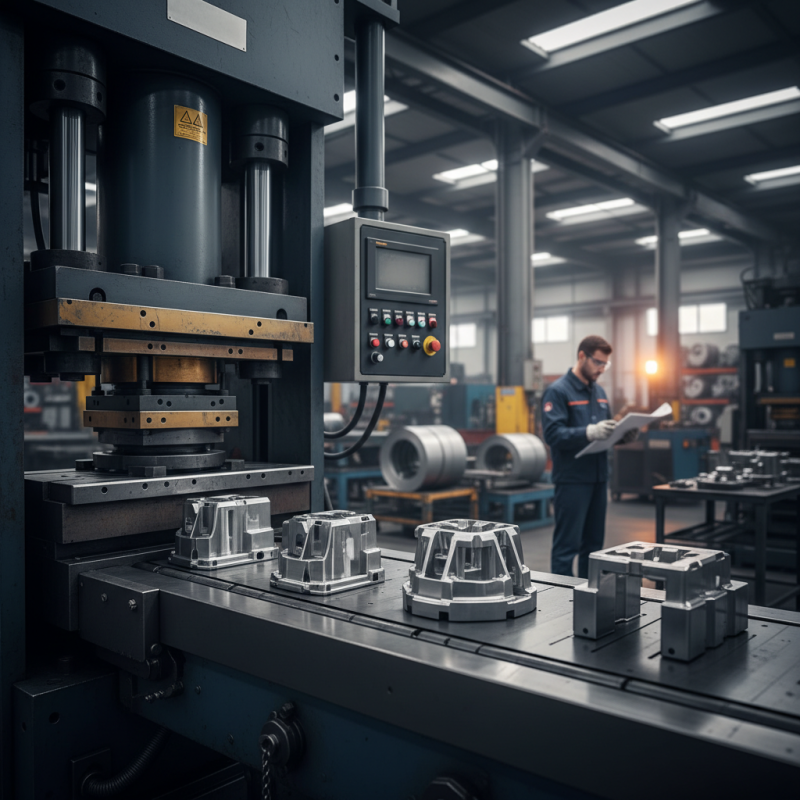
Overview of Die and Stamping Process
The die and stamping process is a critical manufacturing method. It involves shaping materials, typically metal, using a die. This process ensures precision and repeatability, making it ideal for various industries.
During stamping, flat sheets of metal or other materials are fed into a machine. A die presses the material into the desired shape. This technique is used to create parts like automotive components, electronic enclosures, and appliances.
Tip: Always choose high-quality dies for better results. A poorly made die can lead to defects.
Another benefit of the die and stamping process is its efficiency. It can produce large quantities quickly. However, initial setup costs may be high, which can lead to hesitations for smaller companies.
Tip: Perform a cost-benefit analysis before diving into production. Understand your needs and capabilities.
Die and stamping, while effective, does have limitations. Design changes can be costly due to the need for new dies. It’s important to consider flexibility in production. Balancing cost and efficiency is crucial in the decision-making process.
Types of Dies Used in the Stamping Process
The stamping process involves various types of dies, each serving a unique purpose. Progressive dies are among the most common. They allow multiple operations to be performed in a single stroke. This enhances efficiency and reduces material waste. These dies are crucial for high-volume production runs.
Another type is the compound die. It performs two or more operations simultaneously. This kind of die is effective for intricate shapes and designs. However, they can be more complex to design and maintain. There is a fine balance between efficiency and precision here.
Additionally, single-operation dies focus on just one task. They are simpler in design but may lead to longer production times for larger projects. Each type of die has its pros and cons. Choosing the right one requires in-depth knowledge and experience in the field.
Materials Commonly Processed by Die and Stamping
The die and stamping process is essential in manufacturing. It transforms flat sheets of metal into complex shapes. Various materials are commonly used in this process. Steel, aluminum, and copper are the most prevalent. Each material has unique properties, affecting production and performance.
Steel is often chosen for its strength and durability. It is widely used in automotive and construction sectors. According to industry reports, approximately 70% of stamped parts in vehicles are made from steel.
Aluminum, on the other hand, is lightweight and corrosion-resistant. It is ideal for applications needing both strength and weight reduction. The lightweight nature of aluminum can lead to a 30% reduction in component weight.
Copper is another material frequently processed through die and stamping. It has excellent conductivity, making it suitable for electronic applications. However, stamping copper can be challenging due to its malleability. Manufacturers often face issues with maintaining tight tolerances. Overall, each material's characteristics necessitate specific approaches in die and stamping processes. Balancing efficiency and quality can be a constant area for improvement.
Applications of Die and Stamping in Various Industries
Die and stamping processes are essential in numerous industries, including automotive, aerospace, and electronics. In the automotive sector, for example, 85% of all automotive parts rely on stamping technology. This extensive use underscores the process's importance in manufacturing efficiency and cost-effectiveness. Die and stamping can produce complex shapes at high volumes. For instance, the aerospace industry uses these techniques to create lightweight components that meet rigorous safety standards.
This process is also crucial in electronics, where precision is paramount. Stamped parts are often found in everyday devices, from smartphones to home appliances. Reports indicate that the global stamping market was valued at over $250 billion in 2022, with a significant growth rate projected. Despite this growth, challenges exist. Many manufacturers face quality control issues that can lead to waste. It’s essential to refine processes to minimize defects and improve overall yield. Continuous improvement in die design is vital, as small variations can affect product performance significantly.
Applications of Die and Stamping Process in Various Industries
Advantages and Challenges of Die and Stamping Techniques
The die and stamping process plays a critical role in manufacturing. It involves shaping metal sheets into desired forms through intricate tools. This technique is widely used in automotive production, electronics, and appliance manufacturing. A report from the International Sheet Metal Industry emphasizes that nearly 50% of stamped parts are used in automotive applications. This demonstrates its significance in creating structural components.
Despite its advantages, die and stamping techniques come with challenges. High initial costs for tooling can deter smaller companies. According to a study by the Precision Metalforming Association, 37% of metal forming companies cite high tooling costs as a major barrier to entry. Additionally, precision is essential; any error can lead to costly reworks. The process may also be limited by material properties, making some alloys difficult to stamp.
On the other hand, the benefits are substantial. Die and stamping processes allow for high-volume production at remarkable speeds. This efficiency reduces labor costs and enhances productivity. The ability to produce complex shapes with minimal waste adds to its attractiveness. However, companies must continuously evaluate their processes for improvements. Balancing cost, accuracy, and productivity remains an ongoing challenge in the industry.
What is Die And Stamping Process and Its Applications? - Advantages and Challenges of Die and Stamping Techniques
| Aspect | Description |
| Definition | Die and stamping process is a manufacturing technique used to shape and cut materials using specialized tools known as dies. |
| Materials Used | Commonly used materials include metals such as steel, aluminum, and copper, as well as non-metal materials like plastics. |
| Applications | Widely used in automotive, aerospace, electronics, and consumer goods industries for parts and components fabrication. |
| Advantages | High precision, repeatability, efficiency in production, and ability to work with complex shapes. |
| Challenges | Initial tooling costs, the need for continuous maintenance, and limitations on material thickness. |
| Future Trends | Integration of automation and smart technology, increased use of advanced materials, and enhanced sustainability practices. |


