

Reaction Injection Molding can turn liquid polymers into large, lightweight parts with fine surface detail. But a good sample proves little. A supplier must also control mix ratios, mold temperature, cure time, and repeatability across production runs. One missed process check can leave a dashboard panel warped, porous, or inconsistent in color.
Market signals make supplier selection worth careful attention. Grand View Research’s 2023 Reaction Injection Molding market report estimated the global market at about $1.47 billion in 2022 and forecast a 6.8% compound annual growth rate through 2030. These are estimates, not guarantees. Still, they point to expanding demand across automotive, construction, and other applications. Buyers should look beyond capacity claims and ask for evidence: documented process controls, relevant part experience, material traceability, and clear plans for tooling maintenance. A glossy brochure is not enough.
The seven tips below provide a practical framework for comparing suppliers, from technical fit to communication and long-term support. Plastics-processing expert Dr. Tim A. Osswald is a relevant authority on polymer processing, but no verifiable, topic-specific quotation from him was supplied for this introduction; inventing one would weaken its reliability. That matters. A sourcing decision should rest on verifiable capability, not confident wording alone.
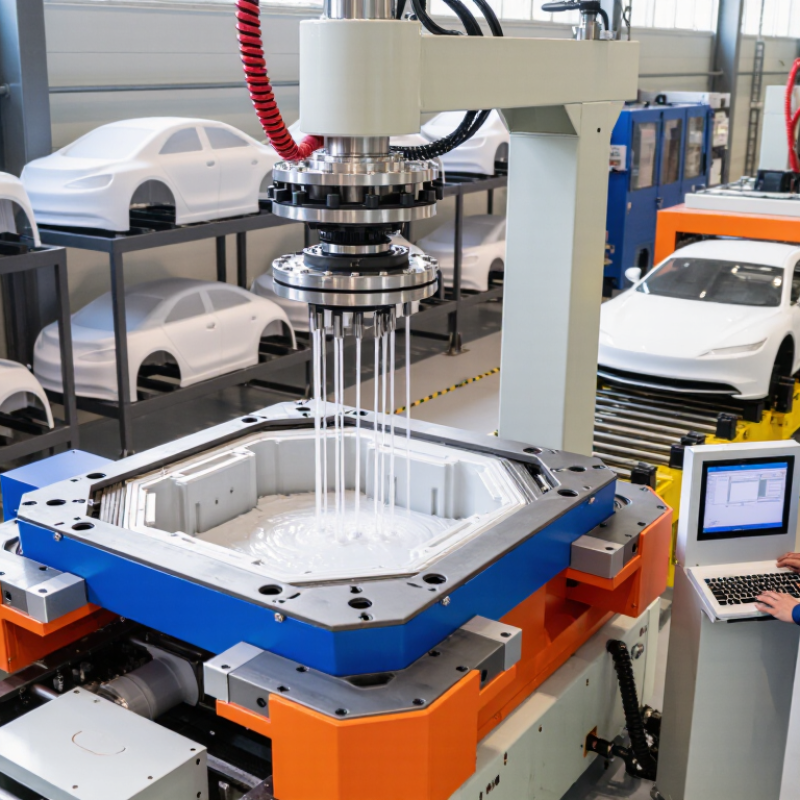
Before requesting reaction injection molding (RIM) quotes, define what the part must do in service. Describe its loads, impact exposure, temperature range, chemical contact, and expected life. A protective housing near a warm motor needs different material behavior than a soft-touch cover. Small details matter. If requirements are uncertain, mark them as assumptions rather than presenting guesses as fixed specifications.
Share a dimensioned drawing or CAD model, along with critical tolerances and surface expectations. Identify thick sections, ribs, deep draws, inserts, and areas where appearance matters. These features can affect tooling, material flow, cycle time, and finishing. Clear geometry helps a supplier flag risks early. Still, early advice is not a guarantee; prototypes may reveal issues that drawings miss. Reality can be messy.
Estimate annual demand, initial order size, and likely changes over the part’s life. A few hundred units may call for a different tool strategy than steady, repeated production. Include ramp-up timing and forecast uncertainty. Suppliers need this context to compare tooling investment, unit cost, and capacity realistically. Leave one question open in the brief: what production volume would trigger a design or tooling review? That invites practical discussion, not just a low quote.

A capable reaction injection molding supplier should explain how it controls the details that shape each part. Ask how operators monitor resin temperature, mix ratio, injection pressure, and mold venting. Request examples of trial records and defect corrections, not just polished sample parts. A supplier that can describe what changed after a short shot or surface blemish offers useful evidence of process experience. Still, a confident explanation is not a substitute for checking production data.
Tip: Match tooling capacity to your part. Confirm maximum mold dimensions, clamping capability, maintenance resources, and realistic lead times. Ask who handles tool modifications and how dimensional changes are approved. If the supplier cannot explain its limits clearly, treat that as a warning sign. Tooling plans can look good on paper; production schedules sometimes disagree.
Tip: Review the quality system behind the machine. ISO’s 2022 Survey recorded more than 1.26 million valid ISO 9001 certificates across 189 countries and economies. Certification signals a documented management system, but it does not guarantee defect-free parts. Check the supplier’s certificate scope and audit status, then ask to see inspection plans, traceability records, nonconformance reports, and corrective-action examples. A useful visit includes watching a real inspection and asking how a failed measurement is contained. Even good systems miss things. That is worth discussing openly.
| Tip | What to Evaluate | Useful Evidence or Questions |
|---|---|---|
| 1. Confirm reaction injection molding experience | Look for demonstrated experience with reaction injection molding (RIM), including the relevant polyurethane or other specified reactive material system, part geometry, and production requirements. | Ask for examples of comparable applications, typical part-size ranges, and how the supplier manages mixing, metering, mold filling, and curing. Request a technical review of your part rather than relying only on general molding experience. |
| 2. Check process controls and technical capability | Assess how the supplier monitors material conditioning, component ratio, temperature, pressure, mixing, and cure conditions. Appropriate controls depend on the material system and part specification. | Ask which process parameters are recorded, how operators respond to out-of-range readings, and how process changes are validated. Confirm that proposed controls align with your drawings, material requirements, and acceptance criteria. |
| 3. Assess tooling design and capacity | Review the supplier’s ability to design, build, maintain, or coordinate molds suited to your part’s size, complexity, surface requirements, and expected production volume. | Discuss mold material and construction, venting, temperature control, parting lines, expected maintenance, ownership, and storage. Request a tooling plan with design-review milestones, trial timing, and responsibilities for repairs or modifications. |
| 4. Involve engineering early | A capable supplier should review manufacturability before tooling is finalized and identify risks such as uneven wall sections, undercuts, demolding challenges, and tolerance or finish requirements. | Ask for a documented design-for-manufacturability review and a clear process for approving drawing, material, or tooling changes. Confirm how prototypes or initial samples will be evaluated against agreed requirements. |
| 5. Verify ISO 9001:2015 quality controls | Check whether the supplier’s quality management system is certified to ISO 9001:2015 and whether the certification scope and site cover the work being considered. Certification supports a quality management system; it does not by itself guarantee a defect-free part. | Request a current certificate and confirm its validity and scope with the issuing certification body. Ask how incoming materials, inspection records, nonconforming output, corrective actions, calibration, and document changes are managed. |
| 6. Validate capacity, lead times, and continuity | Determine whether available molding equipment, labor, material supply, and production scheduling can support both launch requirements and expected ongoing demand. | Ask for realistic lead times for tooling, sampling, and production, plus stated capacity assumptions. Discuss maintenance schedules, backup plans for critical equipment or materials, and how the supplier communicates delays or supply risks. |
| 7. Compare total cost and communication practices | Compare the full commercial picture—not only the piece price—including tooling, setup, inspection, packaging, freight, minimum order quantities, and potential engineering changes. | Request a written quotation with assumptions, exclusions, and quote validity. Identify a technical and commercial contact, agree on update frequency, and clarify how deviations, schedule changes, and corrective actions will be reported. |
Compare polyurethane samples using the same test conditions, not just matching product labels. Ask each reaction injection molding supplier for molded plaques or production-representative parts. Record the formulation, cure schedule, sample thickness, and conditioning time. Small differences matter. A polished data sheet is less useful if the test setup is unclear.
For tensile testing, ASTM D412 can help compare tensile strength, elongation, and modulus. Check that specimens are prepared consistently and note any breaks outside the expected gauge area. ASTM D2240 measures indentation hardness; confirm the Shore scale suits the material. Tip: Request the test date, conditioning details, and individual results, not only an average. Keep the setup consistent. A single sample can hide variation between batches.
Use the results to discuss fit with the supplier. A higher hardness reading is not automatically better, and tensile values alone cannot predict performance in your assembly. Ask how the supplier controls mixing, mold temperature, and cure time, then compare repeat samples when possible. If results vary, pause before choosing a winner. I would also check how the material behaves in the actual part, since lab coupons cannot capture every geometry or loading condition.
For a reaction injection molding supplier, agree on dimensional acceptance before the first tool trial. ISO 20457:2018 provides a framework for tolerances and acceptance conditions for molded plastic parts; it does not set one universal tolerance. Ask the supplier to identify the applicable tolerance group and material assumptions. Mark datums, inspection points, and critical dimensions on the drawing. Then agree how parts will be conditioned, measured, and sampled. Small details matter. A warm, unrestrained part may measure differently after conditioning. Put these requirements in the purchase specification, not only in an email.
PlasticsEurope’s Plastics—the Fast Facts 2024 reports 413.8 million tonnes of global plastics production in 2023. That figure is not a measure of RIM accuracy, but it shows why repeatable specifications matter across production lots. Request measurement reports from parts made with comparable materials, geometry, and tooling. Confirm the gauge method and sample size before approval. A tight tolerance cannot fix an unclear datum scheme. ISO also cannot choose which dimensions matter to your product. Review those assumptions after the first molded samples; drawings can miss practical inspection challenges.
A reaction injection molding supplier should prove pilot-run performance with more than a few attractive parts. Ask for test results from parts made with the intended resin system, mold, and production settings. The pilot should reflect real conditions. Otherwise, a good result may not predict routine output.
Use ASTM D638 when tensile strength and elongation matter, such as for a part that stretches or carries a pulling load. ASTM D790 can assess flexural strength and modulus for parts that bend in service. Agree on specimen preparation, conditioning, test direction, and acceptance limits before the run. The standards describe test methods; they do not decide what counts as acceptable for your part. Small details matter.
Request the raw results, sample count, test date, and material lot identification. Check whether specimens came from different molded parts, not just one unusually good shot. Ask how the supplier handles outliers and failed results. A neat report is helpful, but traceable data is better. If testing is performed externally, confirm the lab’s relevant capability and how samples are identified.
Compare pilot results with the part’s actual use, not only a single peak value. A flexible housing may need consistent bending behavior, while a load-bearing component may depend on tensile performance. One test cannot answer every question. If the supplier cannot explain variation between samples, pause before approving production; that gap deserves a closer look.