China’s diaphragm pump industry is entering 2026 with stronger technical expectations. Buyers now examine flow stability, material compatibility, air consumption, service life, and after-sales support. A reliable Diaphragm Pump should handle demanding fluids without turning every maintenance task into a workshop emergency.
Bill Wilden, founder of Wilden Pump, is widely recognized as a pioneer of air-operated double-diaphragm technology. His practical view remains relevant: “A pump must move product reliably, not merely move it quickly.” This principle shapes our review of China’s leading manufacturers. Speed alone proves very little.
The companies discussed in this guide serve chemical processing, water treatment, food production, mining, ceramics, and general industrial applications. Their product ranges may include air-operated, electric, and mechanically driven diaphragm pumps. We compare manufacturing experience, engineering capability, diaphragm materials, certifications, customization, export performance, and customer support.
Factory details matter.
A polished website is not enough. The real evidence appears in casting quality, diaphragm testing, spare-parts availability, and response during a breakdown. Some manufacturers offer impressive specifications, yet field performance can vary with installation, fluid viscosity, and operator practice. That deserves attention.
This ranking is therefore a practical reference, not an absolute verdict. It combines published information, industry experience, product data, and visible market reputation. Information may change as companies expand or revise their product lines. Readers should still request test reports, performance curves, and application recommendations before purchasing. A careful decision often begins with inconvenient questions.
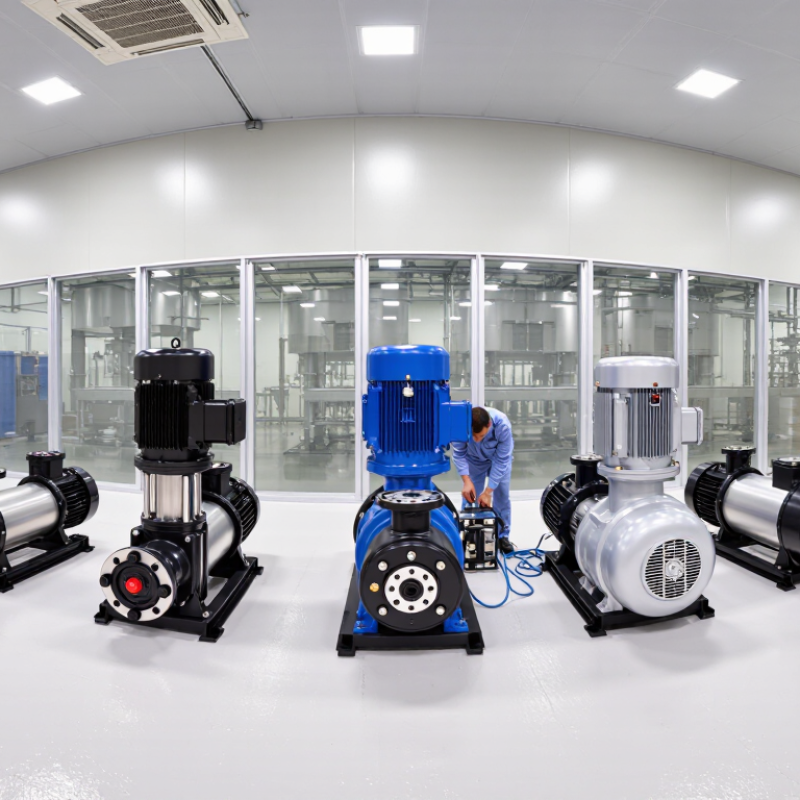
A diaphragm pump is a positive-displacement machine that transfers liquid through repeated diaphragm movement. The diaphragm flexes inside a sealed chamber, creating alternating suction and discharge strokes. Check valves guide the fluid in one direction. The pumped liquid remains separated from the drive mechanism. This design helps manage corrosive, abrasive, viscous, or shear-sensitive fluids. Material selection still matters greatly.
In an air-operated model, compressed air shifts the diaphragm from one side to the other. A control valve changes the air supply after each stroke. Flow rate depends on air pressure, stroke frequency, fluid viscosity, and discharge resistance. Higher pressure does not always produce better performance. It may increase wear or cause unstable cycling. Pulsation is normal, so piping may need a dampener. In real installations, textbook efficiency often changes with temperature and hose length. That detail is easy to overlook.
Tips: Check valve seats regularly. Keep the air supply clean and dry. Install a filter-regulator-lubricator when suitable. Avoid excessive tightening around the diaphragm chamber. Monitor unusual noise, slow cycling, or irregular discharge. These signs can reveal blocked valves, damaged diaphragms, or insufficient air volume. A practical inspection record improves reliability, although it may not explain every failure. Testing the pump under actual operating conditions remains essential.
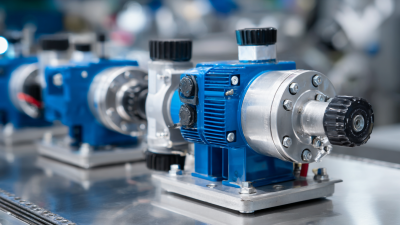
China’s diaphragm pump manufacturing landscape in 2026 is becoming more specialized and application-driven. Producers are serving chemical processing, wastewater treatment, mining, food production, and laboratory equipment markets. Demand is moving beyond basic air-operated pumps. Buyers now expect stable flow, lower air consumption, and easier maintenance.
Many factories combine casting, CNC machining, rubber molding, and final assembly under one production system. This arrangement can shorten lead times and improve control over dimensional accuracy. Engineers commonly select PTFE, EPDM, FKM, or other elastomers according to temperature and fluid compatibility. A pump handling abrasive slurry needs different diaphragm protection from one moving clean water. Small details matter, especially around valve seats and bolt torque.
Quality inspection often includes pressure testing, leak checks, flow verification, and continuous operation trials. Export-oriented manufacturers are also improving documentation, traceability, and technical support. However, consistency remains uneven across the market. A polished sample does not always represent every production batch. This is where factory audits, material certificates, spare-part records, and witnessed testing become useful. Some suppliers still rely too heavily on manual adjustments. That weakness deserves honest attention.
Customization is another visible trend in 2026. Manufacturers are adapting port sizes, diaphragm materials, drive systems, and control interfaces for specific installations. Digital monitoring is entering larger industrial projects, although adoption is not universal. Buyers should compare lifecycle cost, not only purchase price. A cheaper pump may consume more compressed air or require earlier diaphragm replacement. Practical field experience still reveals problems that brochures often miss.
| Rank | Anonymous Manufacturer Profile | Primary Pump Category | Typical Drive | Representative Flow Range | Representative Pressure Range | Common Wetted Materials | Key Application Sectors | Typical Export Markets | 2026 Market Position |
|---|---|---|---|---|---|---|---|---|---|
| 1 | Profile A — Industrial Air-Operated Specialist | Air-operated double-diaphragm pumps | Compressed air | Up to approximately 60 m³/h | Up to approximately 8 bar | PP, PVDF, aluminum, stainless steel | Chemical transfer, surface treatment, wastewater | Southeast Asia, Europe, Middle East | Broad industrial coverage |
| 2 | Profile B — Sanitary Process Pump Builder | Sanitary diaphragm pumps | Pneumatic or electric | Approximately 0.5–35 m³/h | Approximately 3–7 bar | 316L stainless steel, PTFE, EPDM, FKM | Food, beverage, cosmetics, pharmaceutical processing | East Asia, North America, Europe | Strong hygienic-process focus |
| 3 | Profile C — Chemical-Resistant Pump Manufacturer | Fluoropolymer-lined diaphragm pumps | Air-operated | Up to approximately 45 m³/h | Up to approximately 8 bar | PTFE, PVDF, polypropylene, stainless steel | Acids, alkalis, solvents, plating chemicals | Asia-Pacific, Latin America, Middle East | High corrosion-resistance specialization |
| 4 | Profile D — Mining and Slurry Equipment Supplier | Heavy-duty pneumatic diaphragm pumps | Compressed air | Approximately 5–70 m³/h | Approximately 4–8 bar | Ductile iron, stainless steel, elastomers, polyurethane | Mining drainage, mineral processing, abrasive slurry | Central Asia, Africa, South America | Heavy-duty and abrasive-service orientation |
| 5 | Profile E — Compact OEM Pump Producer | Small electric and pneumatic diaphragm pumps | DC motor, AC motor, or air drive | Approximately 0.1–12 m³/h | Approximately 1–6 bar | Acetal, polypropylene, EPDM, PTFE | Printing, dosing, laboratory equipment, water treatment | North America, Europe, Southeast Asia | Flexible private-label and OEM supply |
| 6 | Profile F — Wastewater and Environmental Systems Integrator | Process diaphragm and dosing pumps | Electric or pneumatic | Approximately 0.2–30 m³/h | Approximately 2–10 bar | PVC, PP, PVDF, stainless steel | Municipal wastewater, industrial effluent, sludge transfer | Asia-Pacific, Africa, Middle East | Project-based environmental applications |
| 7 | Profile G — Oil, Gas, and Energy Equipment Supplier | Process-grade diaphragm pumps | Pneumatic or motor-driven | Approximately 1–40 m³/h | Approximately 4–16 bar | Carbon steel, stainless steel, PTFE, reinforced elastomers | Fuel transfer, chemical injection, refinery maintenance | Middle East, Central Asia, Africa | Industrial process and energy projects |
| 8 | Profile H — Paint, Ink, and Coating Pump Specialist | Low-pulsation diaphragm pumps | Air-operated | Approximately 0.5–25 m³/h | Approximately 3–8 bar | Aluminum, stainless steel, PTFE, solvent-resistant elastomers | Paint, coatings, printing ink, adhesives | Europe, Southeast Asia, Latin America | Viscous-fluid and solvent-service expertise |
| 9 | Profile I — Agricultural and Irrigation Equipment Maker | Chemical-resistant transfer pumps | Electric or pneumatic | Approximately 0.5–20 m³/h | Approximately 2–7 bar | Polypropylene, PVDF, stainless steel, EPDM | Fertilizer, pesticide, irrigation, farm chemical handling | South Asia, Southeast Asia, Africa | Cost-efficient agricultural fluid handling |
| 10 | Profile J — Custom Engineering and Export OEM | Application-specific diaphragm pumps | Electric, pneumatic, or hybrid | Approximately 0.1–50 m³/h | Approximately 2–12 bar | PP, PVDF, aluminum, stainless steel, engineered elastomers | General industry, equipment integration, special chemical handling | Global distributor and OEM channels | Customization and multi-sector flexibility |
Note: The rankings represent an anonymized capability-based market overview rather than a verified sales ranking. Flow and pressure figures are representative specification ranges commonly offered for the stated pump categories and should be confirmed against the supplier’s current technical documentation before procurement.
Selecting a leading Chinese diaphragm pump manufacturer requires more than comparing catalog prices. MarketsandMarkets’ 2024 Diaphragm Pumps Market report identifies chemical processing, water treatment, and pharmaceuticals as major demand areas. Buyers should therefore match each supplier’s testing evidence with the intended fluid, pressure, temperature, and duty cycle.
Start with engineering depth. Request material certificates for diaphragms, valves, and wetted chambers. Ask for a documented endurance test, not only a factory performance curve. A reliable manufacturer should provide flow data at several pressures, leakage inspection records, and calibration details. ISO 9001 certification supports process control, but it does not prove pump quality alone. That distinction matters.
Look for practical manufacturing evidence. A capable factory should show machining inspection points, clean assembly zones, spare-parts traceability, and clear batch records. For export projects, review conformity documents, packaging tests, and response times for technical questions. The International Energy Agency reports that industrial efficiency improvements remain important for reducing energy demand, so compare air consumption or motor efficiency, not just purchase cost. Request references from similar applications.
Some evaluations remain imperfect. Supplier websites can overstate capabilities. A polished audit may also miss diaphragm fatigue after months of cycling. A small pilot order, witnessed factory acceptance test, and independent fluid-compatibility review provide stronger evidence than rankings alone. Check the details.
The chart presents a neutral procurement scoring model for evaluating Chinese diaphragm pump manufacturers. The criteria reflect commonly used industrial purchasing considerations, including product reliability, technical capability, compliance, production capacity, service support, and total cost of ownership. The percentages are evaluation weights rather than company rankings or brand-specific performance data.
China’s Top 10 Diaphragm Pump Manufacturers in 2026 reflect China’s expanding role in fluid-handling equipment. Grand View Research estimates the global diaphragm pump market will grow steadily through 2030, supported by chemical processing, water treatment, and food production. MarketsandMarkets also identifies Asia-Pacific as a major demand center, driven by industrial investment and process automation.
A reliable 2026 ranking should examine more than production volume. Engineers should compare flow stability, pressure performance, diaphragm life, material compatibility, and after-sales response. Air-operated double-diaphragm pumps remain useful where compressed air, solids, or variable viscosity are present. Electric models can reduce operating noise and improve energy control. In factory audits, buyers should inspect machining accuracy, assembly cleanliness, pressure testing, and traceable spare-part records.
Details matter. A pump handling corrosive liquid needs suitable elastomers and wetted metals, not merely a strong motor. ISO 9001 certification can support process control, but it does not guarantee field performance. That is often overlooked. Published specifications may also use different testing conditions, making direct comparisons imperfect. Buyers should request measured flow curves, dry-run limits, noise data, and service records before selection. The strongest manufacturers usually combine export experience with application engineering, although some product documentation still needs clearer English and better operating warnings.
Diaphragm pumps serve chemical dosing, wastewater treatment, food processing, and battery production. Their sealed fluid paths reduce leakage risks during corrosive or abrasive transfer. Grand View Research estimated the global diaphragm pump market at about USD 5.2 billion in 2023. Its report projects steady growth through 2030, supported by chemical and water infrastructure investment.
Applications expose different performance demands. A wastewater line may need abrasion resistance and stable solids handling. A food facility requires hygienic surfaces, cleanable geometry, and suitable elastomers. PTFE diaphragms often support aggressive chemicals, while reinforced rubber can suit abrasive slurries. Engineers should verify flow accuracy, pulsation, temperature, and maintenance intervals. Small details matter.
Quality assessment should include ISO 9001 production controls, material traceability, pressure testing, and documented leak checks. For hazardous locations, applicable ATEX or IECEx requirements may also influence design. The U.S. Department of Energy notes that compressed-air systems commonly lose 20–30% through leaks and inefficient use. Air-operated pumps therefore need efficient valves, correct sizing, and routine air audits. Digital pressure sensors and remote monitoring are becoming practical trends. They can reveal a blocked suction line before damage occurs. However, forecasts differ between reports. Smart monitoring also adds cost, wiring, and cybersecurity concerns. A cheaper pump may quietly consume more energy.